


I'm Seth Peek, owner of Peek Painting. I've been painting since 2004 and founded Peek Painting in 2018 to bring homeowners across San Luis Obispo County and the Central Coast cleaner results and finishes that actually hold up to our sun and coastal air.
Since then, my team and I have completed 1,300+ residential and commercial projects. We now take on around 300 a year. I write these articles to share what two decades on the ladder have taught me about prep, products, and getting paint to last.
Paint sheen is the level of shine in a finish. Matte and flat show no reflection at all, high gloss looks close to a mirror, and every other finish sits somewhere on the scale between them.
The easiest way to picture it is a car. A car with a matte wrap won’t show your reflection. A polished glossy one will. The more of your reflection you can see in a surface, the higher its sheen. Once you have paint sheen explained as a scale of shine, picking one for each room gets a lot simpler.
Paint Sheen Scale, From Least to Most Shine
| Sheen | How it looks | Where it works |
|---|---|---|
| Flat or matte | No shine | Hides the most flaws |
| Eggshell | A faint glow | Easy to live with on walls |
| Satin | A soft luster | Wipes clean |
| Semi-gloss | Shiny | Tough, good for trim |
| High gloss | Close to a mirror | The toughest of all |
I talk through the different types of paint sheen in this short video.
Sheen Decides How Light Behaves on a Surface
The practical paint sheen meaning is about light. A low sheen soaks light up, so bumps, patches and drywall texture fade into the wall. A high sheen throws light back, so the surface wipes clean easily but shows every flaw underneath it.
Most stores sell about five paint sheen levels, and the five common finishes usually run flat or matte, eggshell, satin, semi-gloss and gloss. Each step up adds shine and toughness. Each step down adds forgiveness.
Matte Soaks Up Light and Keeps a Wall Calm
Matte sits at the no-reflection end of the scale, along with flat and dead flat. Sunlight hits it and simply stops. You can still see the texture of the wall, but the light doesn’t bounce back at you, so small dents, old patches and uneven spots stay hidden.
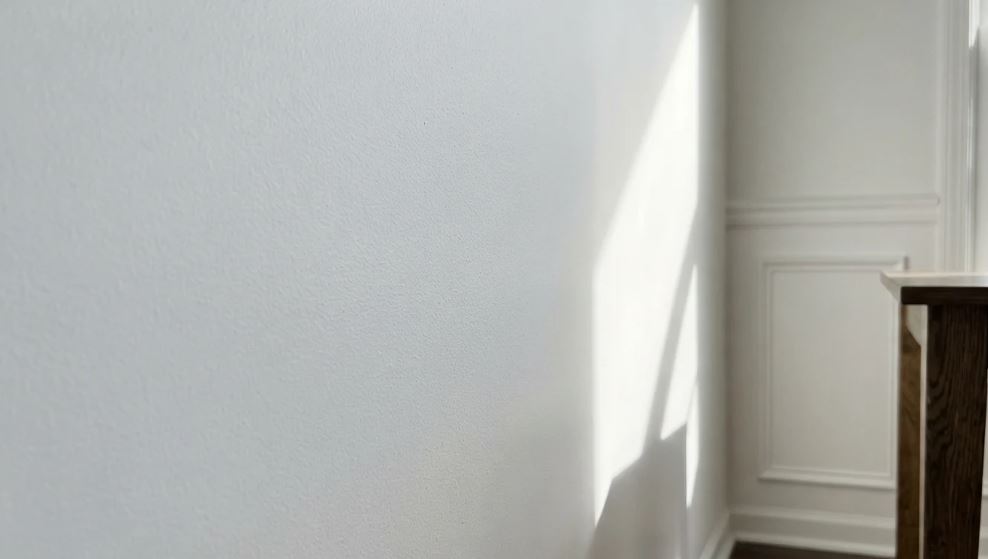
What it brings
No glare, even in full sun, and a finish that hides small flaws
Pros
- No glare, even in full sun.
- Hides dents, patches and uneven spots.
- Touch-ups blend in well.
- Gives color a soft, even look.
- Works well on ceilings and older walls.
Cons
- Scrubbing can leave shiny spots.
- Hard cleaning can wear the paint thin.
- Grease and fingerprints soak in.
- Not suited to kitchens, bathrooms or busy hallways.
- Scuffs more easily where furniture or hands rub.
Satin Gives Built-Ins a Soft, Wipeable Glow
Satin is a step up in shine. In sunlight it gives a soft, diffused, almost pearly glow rather than a reflection. Built-ins get handled every day. Satin can be wiped and scrubbed without losing its look, yet it’s still forgiving enough that a little wood grain or a small dent doesn’t jump out.
If you’re weighing a finish for built-ins or painted cabinets, satin is the balanced middle choice: enough shine to clean, not so much that every flaw shows.

What it brings
A soft glow that cleans easily and still hides most imperfections
Pros
- Wipes clean without losing its look.
- A soft glow without a mirror-like shine.
- Still hides most small flaws.
- Handles moisture better than matte.
- Works on built-ins, trim, doors and busy rooms.
Cons
- Shows more flaws than matte or eggshell.
- Touch-ups can show as a spot with a different shine.
- Lap marks show if it’s rolled poorly.
- Can look too shiny on a large wall in strong sun.
- Needs a smoother surface than matte.
High Gloss Reflects Light Almost Like a Mirror
High gloss sits at the top of the scale. Up close, it reflects the window behind you, a little bent but clearly there. It handles grease, fingerprints and constant wiping better than anything below it, which is why it suits kitchen cabinet doors.
The catch is that high gloss shows every imperfection. Ripples, brush lines, a speck of dust that landed while it was wet, all of it catches the light. The surface underneath has to be sanded smooth, cleaned and free of dust before the first coat, or the shine will put every mistake on display.
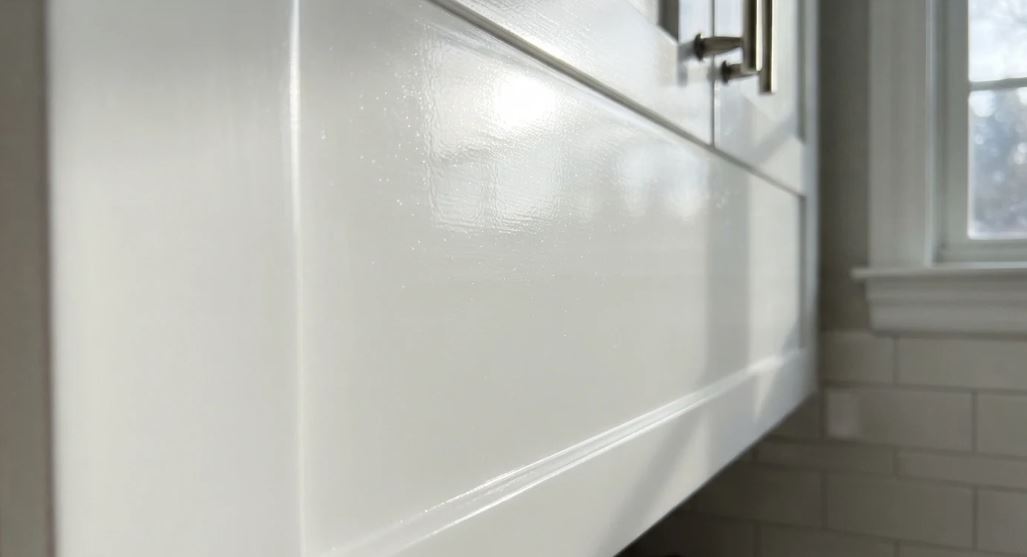
What it brings
The toughest, most wipeable surface, with a sharp reflection
Pros
- The toughest of all the sheens.
- Wipes clean with almost no effort.
- Stands up to grease, moisture and fingerprints.
- Gives a sharp, mirror-like look.
- Makes cabinets, doors and accent pieces stand out.
Cons
- Shows every ripple, brush line and dust speck.
- Needs heavy prep: sanding, filling and a dust-free surface.
- Often needs more coats to look even.
- Touch-ups are hard to hide.
- Too much glare for most walls, especially in sunny rooms.
Eggshell and Semi-Gloss Fill the Gaps Between Them
- Between matte and satin sits eggshell. It has a faint glow and cleans up better than flat paint while still hiding most wall flaws.
- Between satin and high gloss sits semi-gloss. It’s shiny and tough, so it’s a common pick for trim, doors and rooms with moisture, but it shows more flaws than satin does.
Put those two in with the big three and you have the paint finish types you’ll find on most cans. If you’ve ever looked at a paint sheen chart in a store, it’s usually these five lined up from dullest to shiniest.
One Wall Shows Three Sheens Side by Side
A dark color makes sheen easier to read, because shine stands out more against a deep tone. The wall below is one charcoal color in three panels. The left panel is the flattest, matte, the middle is satin, and the right is gloss.
On the left, the texture is there, but the wall stays even and quiet. In the middle, a soft sheen starts to pick up the light. On the right, the glare is sharp, and the wall texture shows far more than on the other two panels.
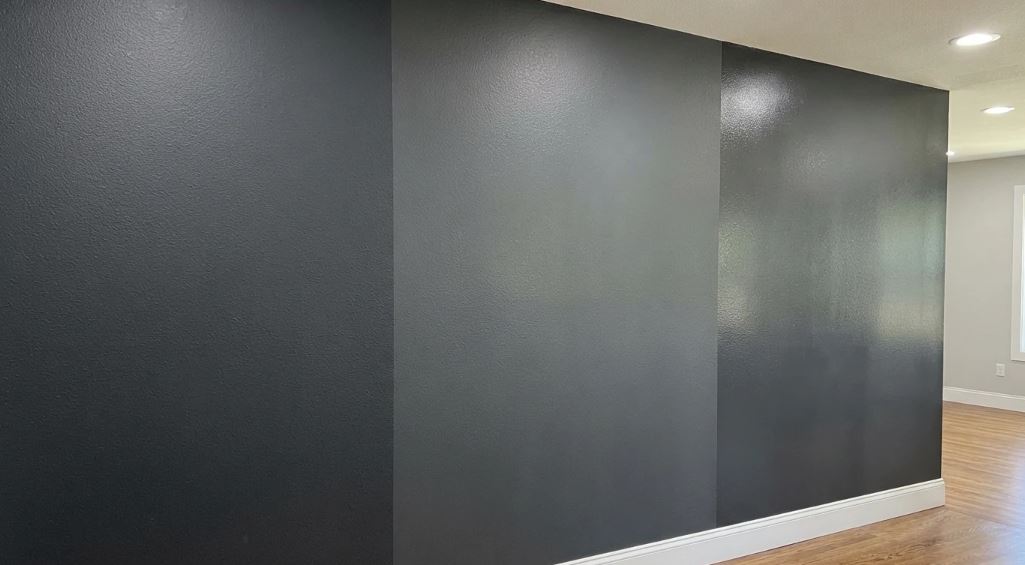
A paint sheen comparison like this shows the trade-off fast. Seeing matte vs satin vs gloss on one wall turns the choice into a question of what you want the light to do.
Where Each Sheen Belongs in Your Home
Use this as a simple paint sheen guide for your rooms:
- For most interior walls, I recommend a low sheen like eggshell or a low luster. It hides wall flaws and still cleans up.
- For trim and doors, go with satin or semi-gloss. Those surfaces get bumped and wiped, and a little shine handles that.
- A step up in sheen also makes sense in busier household rooms like kitchens, hallways and kids’ bedrooms.
- Outside, flat is my usual pick for walls, and the exterior sheen choices work a little differently from inside.
These are starting points, and some people prefer a glossier wall or flatter trim. Knowing the types of paint sheen lets you make that call on purpose.
Questions About Choosing a Finish
Is flat paint the same as matte?
Close, but not always identical. Both sit at the low end with almost no reflection. Some lines make flat slightly duller than matte, and dead flat is duller still. On a wall, most people can’t tell them apart.
Can I use different sheens in the same room?
Yes, and it’s common. A low-shine finish on the walls with a shinier one on trim and doors gives a clean contrast, and the trim gets a tougher surface where hands and shoes touch it.
Can I switch to a different sheen when I repaint?
Yes. Going from shiny to flatter usually means a light sanding first so the new coat grips. Going the other way needs smooth, well-filled walls, since the extra shine will show what’s underneath.
Which sheen is easiest to touch up?
Flatter finishes blend best. Touching up a shiny surface tends to leave a spot that catches light differently from the paint around it, so on satin or gloss, repainting the full section usually looks better.
What sheen works for a bathroom?
Go with something that handles moisture and wiping, usually satin or semi-gloss. Flat finishes tend to hold onto moisture marks and are harder to clean in a room full of steam.
The Right Sheen Starts With How the Room Gets Used
Color gets most of the attention, but sheen decides how that color behaves in your light every day. If you’re torn between two finishes for a room, set up an estimate and bring the question along. We’ll match each surface to a sheen that fits how you live in it.


