


I'm Seth Peek, owner of Peek Painting. I've been painting since 2004 and founded Peek Painting in 2018 to bring homeowners across San Luis Obispo County and the Central Coast cleaner results and finishes that actually hold up to our sun and coastal air.
Since then, my team and I have completed 1,300+ residential and commercial projects. We now take on around 300 a year. I write these articles to share what two decades on the ladder have taught me about prep, products, and getting paint to last.
Cabinet painting splits the job in two. The doors and drawer fronts come off and get sprayed separately on racks, while the cabinet boxes stay put and get sprayed in place after the kitchen is masked off. That split is the main reason a professional job comes out smoother than anything done with a brush.
My dad and uncles painted for a living, so I learned early that how professional painters paint cabinets has more to do with setup. Below, we follow one recent kitchen cabinet painting project in Paso Robles from the first door coming off to the last one going back on. This is the exact step by step process we follow in all our cabinet painting work.
The Doors Come Off and the Kitchen Gets Sealed Up
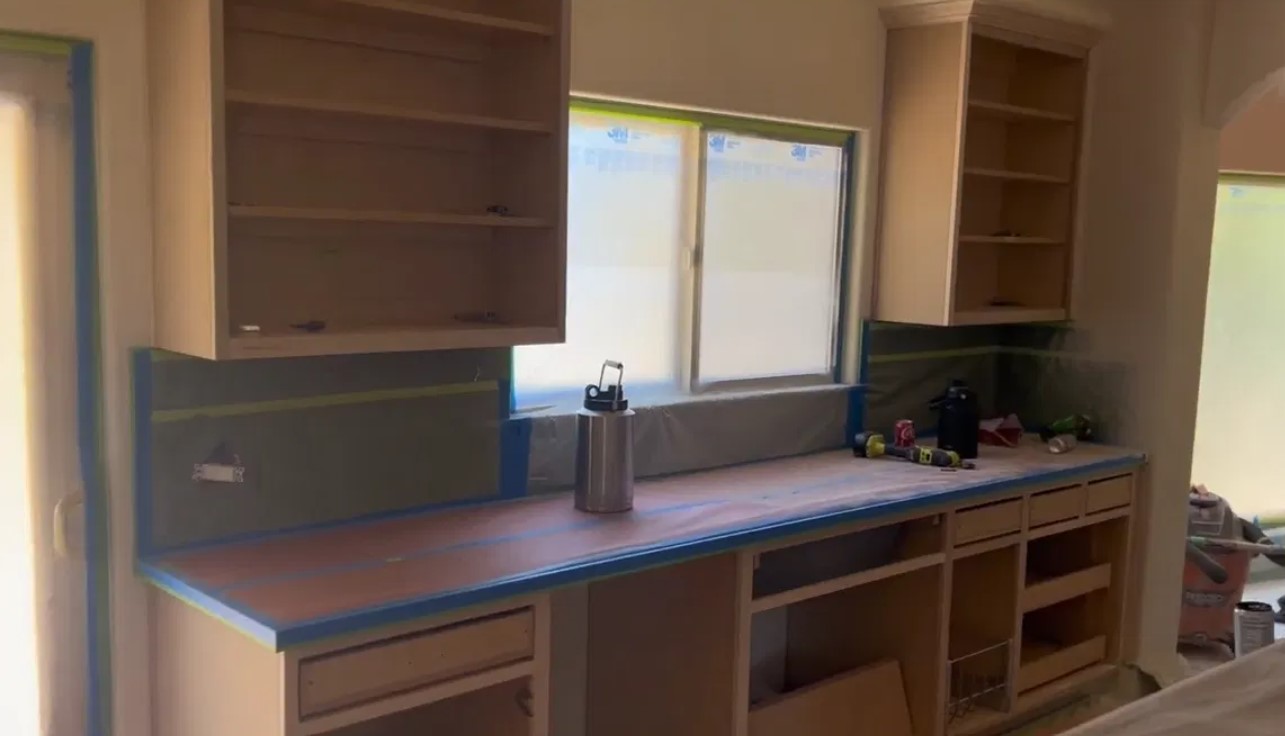
In that kitchen, the first morning went to pulling every door and drawer front, numbering each one by its spot, and bagging the hinges so nothing got mixed up on the way back. With the doors gone, the open boxes are easy to reach and clean.
Then we sealed the room. The countertops went under paper with tape along every edge, the backsplash and outlets were covered, the windows got film, and the archway into the next room was closed off with plastic. Floors got covered too, since a stray drip on tile or wood is far easier to prevent than to scrape off later.
This is the part of professional cabinet painting homeowners see the most of. It looks like a lot, but spray mist travels, and I’d rather over-mask than spend an hour wiping a fine dusting off someone’s countertop.
The Doors Get Their Own Spray Setup
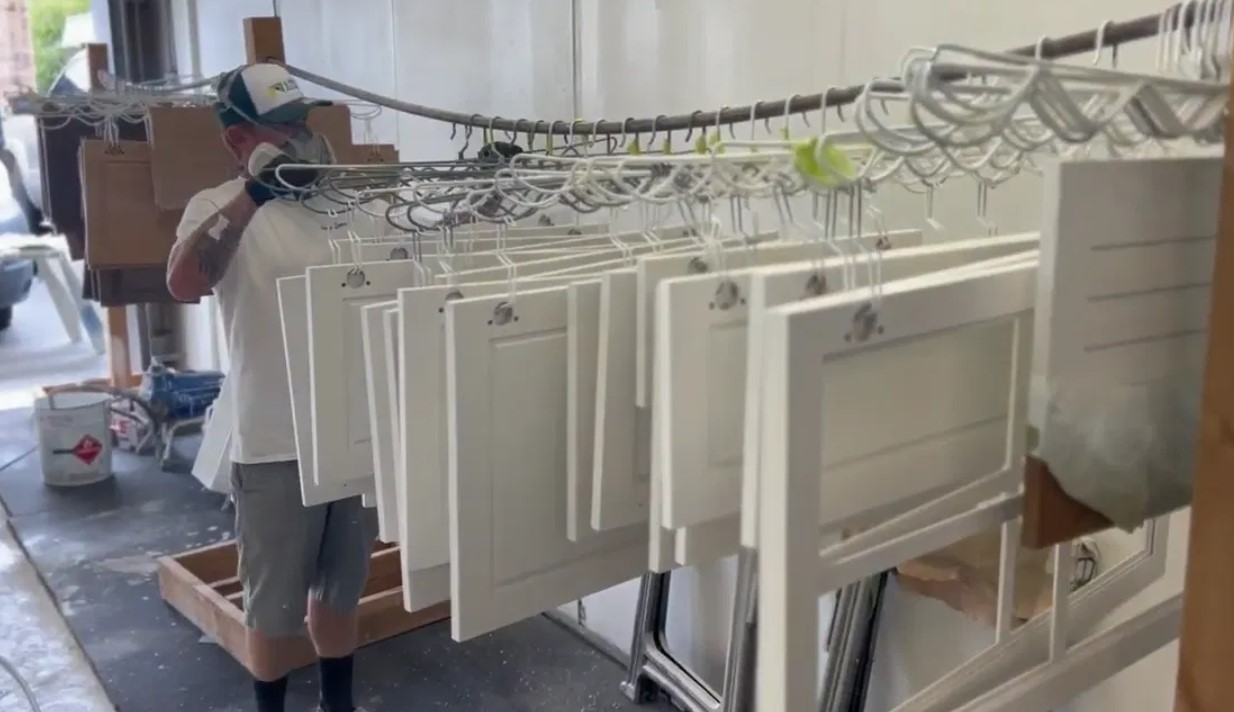
We give doors and drawer the most attention because they’re what you see and touch every day. Once they’re off, each one is cleaned, scuffed and primed, then hung on a rack where both faces can be reached without anyone handling the wet side. The backs get sprayed first and the faces last, so the side you see every day gets the cleanest pass.
I like spraying doors in an enclosed space because it takes the weather out of it. Wind, fog and coastal dust can all settle on a fresh coat outside, and walls around the work keep conditions steady from the first door to the last.

We use a Sprayer To Lay Paint Down Without Brush Marks
A spray gun breaks paint into a fine mist that lands as an even film, with no bristle lines and no roller texture. That’s why spray painted cabinets look so different from brushed ones once the light hits them. In an enclosed spray area, airflow carries overspray away from the doors, and the painter wears a respirator the whole time.
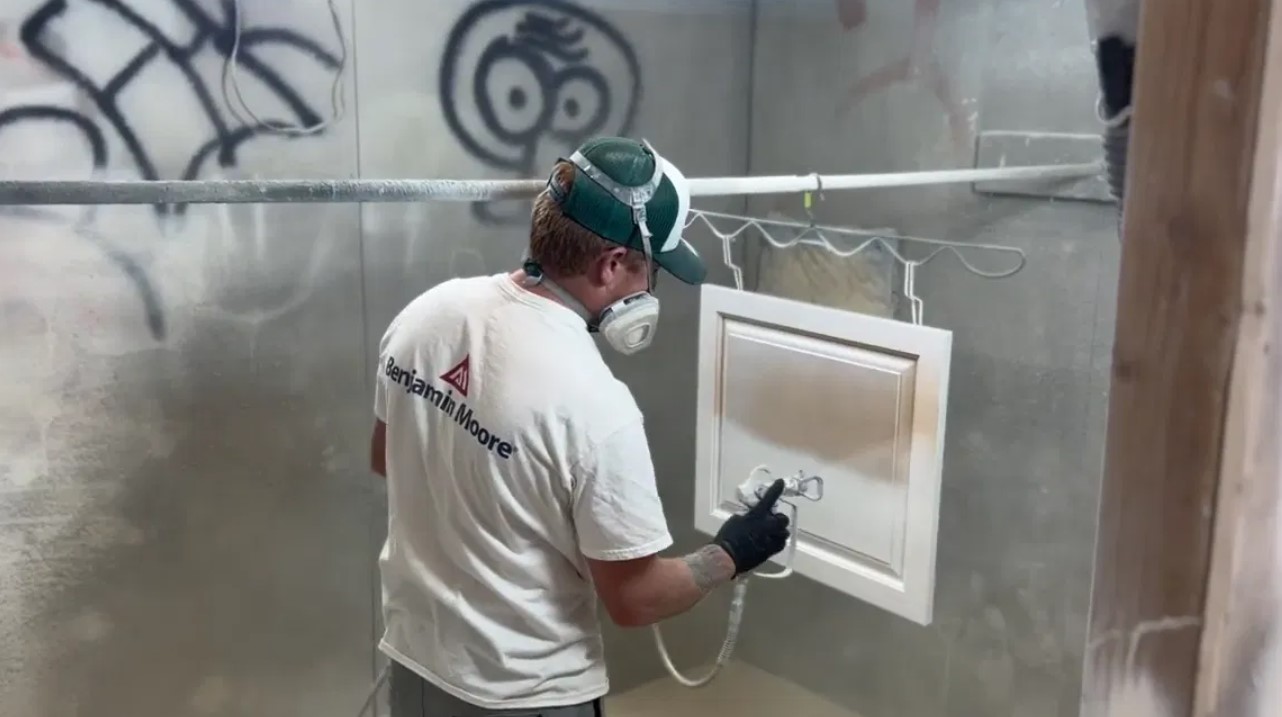
Getting a smooth finish on painted cabinets comes down to steady passes, the right distance and a clean space. Doors usually get a coat of primer and then three thin finish coats, one more than the frames get, because doors take the most handling. We lightly sand between coats so each one lays flat on the last. After spraying, the doors stay on the racks, untouched, until they’re ready to handle.
The Cabinet Boxes Get Sprayed Right Where They Stand
The boxes, face frames and any built-ins can’t leave the house, so they’re sprayed in place. Before any spraying, the frames are cleaned of kitchen grease and scuff-sanded so the paint grips. The frames then get primer and two finish coats, sprayed in place. Everything around them stays masked, the floor stays covered, and we keep air moving through the room while we work. Spraying indoors does bring some odor for a short while, and these tips to clear paint smell help once we pack up for the day.
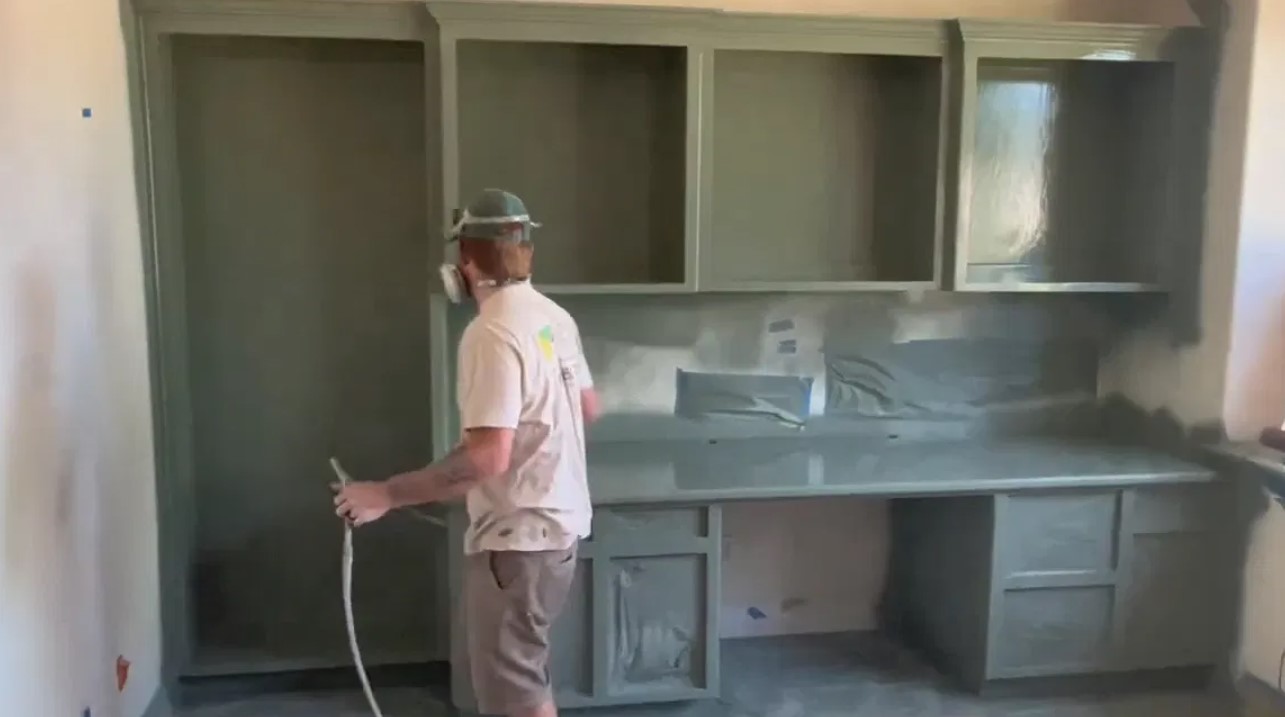
This is also where most of the in-home time goes, and it’s the part I watch closest. Every edge and inside corner of a frame has to be reached, and the masking has to stay put until the last pass is done.
Why the Result Looks Like It Came From a Factory
When people ask me about DIY vs professional cabinet painting, I tell them the honest difference is the setup, not the person holding the brush.
Most homeowners brush or roll doors on a garage table, which leaves texture and drips on the edges. Brushing can work on a small vanity, but on a full kitchen the difference shows every time you open a door. Racks, a clean spray setup and the right equipment are how you get close to a factory finish on painted cabinets, with every panel and edge carrying the same sheen.
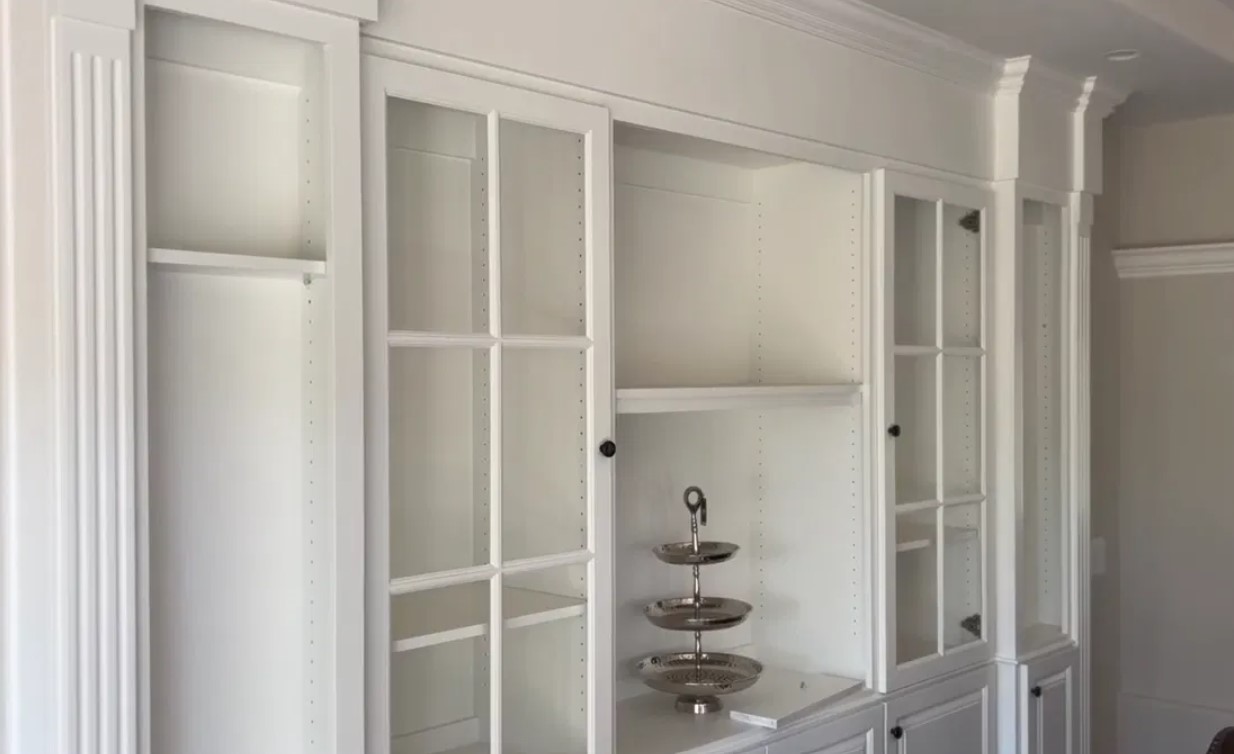
Families usually tell me living through the job was easier than they expected. The kitchen is covered for a few days while the boxes are done, and the doors come home and go back on their numbered spots once they’ve cured. If you’re planning a kitchen refresh, our cabinet work follows this same process.
FAQ
How long will my kitchen be out of use?
Plan on the room being covered for several days while the boxes are done, and on the doors taking a bit longer before they’re rehung. We’ll give you a schedule before we start.
Can I still use my fridge and sink?
Usually, yes, with some limits. We mask around what we can work around and tell you each day which areas are off limits. Most families plan simple meals that week.
Will my hinges and hardware go back on?
Unless you’re replacing them, yes. We bag and label hinges and pulls when the doors come off, so every piece returns to the right spot. It’s also a good moment to pick new hardware if you’ve been considering it.
Do you paint the inside of the cabinets?
Only if you ask. Most kitchens get the outside faces, frames and door backs, while the shelves inside stay as they are. Painting interiors adds time and keeps the cabinets out of use longer.
Will my house smell like paint?
For a short time while the boxes are sprayed in place. We ventilate as we work and choose lower-odor coatings where they suit the job (confirm). Most of it clears once the room has aired out.
Ask How the Doors Are Handled
If you’re weighing a cabinet project, how the doors are handled is the first thing I’d ask any painter about. To see how it would work in your kitchen, ask for a quote and we’ll lay out every step for your kitchen.


